Africa’s Fintech Future Tied to $65 Billion Digital Payment Shift
On April 24, 2026, a BCG report projected Africa’s fintech revenue could reach $65 billion by 2030, up from $5 billion in 2021, driven by mobile money, credit systems, and cross-border payment reform.
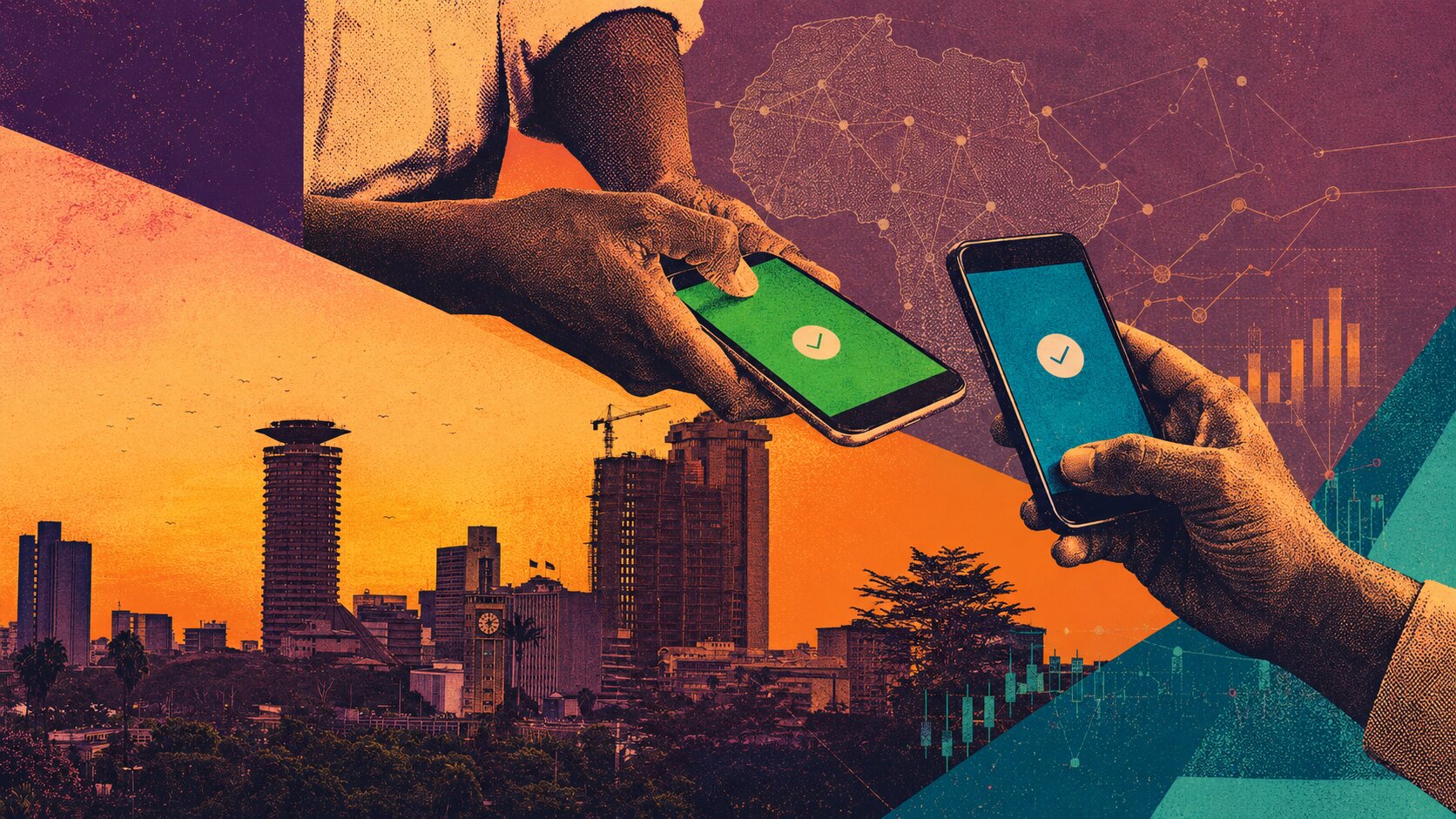
Mobile money scaled fast across Africa. Credit systems, cross-border payments, and business finance are still trying to catch up. That idea sits at the heart of a new conversation unfolding across Africa's financial sector. Mobile money changed how millions send and receive cash. The next challenge is far more ambitious: turning digital payments into a financial system that can support businesses, credit, trade, investment, and economic growth at scale.
A report released by Boston Consulting Group (BCG) on April 24, 2026, titled Beyond Payments: Unlocking Africa's Second FinTech Wave, argues that Africa's fintech industry could generate $65 billion in revenue by 2030. The figure first appeared in a 2023 study produced with QED Investors, but the latest report goes further by examining what must happen for that projection to become reality.
The numbers are striking. Fintech revenue stood at roughly $5 billion in 2021. Reaching $65 billion by 2030 would mean 13-fold growth, the fastest pace projected for any fintech market in the world. More than half of fintech firms already operate in payments and lending, while those same segments attract over 60% of equity funding. You might assume Africa's fintech story began recently, but reality looks different.
The first wave emerged during the 2010s and continued into 2020. Consumer-focused payment platforms spread rapidly across the continent. Companies such as Wave in West Africa, PalmPay, OPay in Nigeria, and Chipper across multiple markets expanded access even further.
Results followed. Around 40% of adults in Sub-Saharan Africa now use mobile money. African platforms process 74% of global mobile money transaction volume, a figure few regions can match.
Those achievements explain why BCG describes the coming years as a second wave rather than a continuation of the first.
Attention is shifting away from simple peer-to-peer transfers and toward business-to-business payments, public-sector digitization, credit systems, merchant finance, and cross-border commerce. Financial depth has become the new challenge.
Many people can move money digitally. Far fewer can access affordable credit. World Bank data shows that nearly half of Sub-Saharan African adults who borrow still rely on informal or semi-formal channels rather than banks or formal lenders. Ghana, Kenya, and Uganda have made progress on inclusion, yet formal credit penetration remains relatively shallow.
That gap explains why companies are experimenting with new models. Paymob has partnered with a regional bank to connect merchant lending directly to payment flows. Emerging lenders increasingly rely on transaction data to evaluate borrowers who lack traditional credit histories. Nigeria and Kenya are advancing open banking frameworks designed to make financial data more portable and useful.
Progress is visible across the continent. Flutterwave expanded its remittance infrastructure into Senegal and Côte d'Ivoire, allowing direct mobile money payouts while reducing intermediary layers. PAPSS, the Pan-African Payment Settlement System, continues to support payment integration linked to the African Continental Free Trade Area. Nigeria's Inter-Bank Settlement System and Kenya's PESALink have strengthened domestic real-time payment infrastructure. Digital ID programs are expanding. Fintech licensing frameworks are becoming clearer in several markets.
Another trend gathering momentum involves stablecoins. Data from 2026 shows that 43% of crypto transactions in Sub-Saharan Africa involve stablecoins. Enterprise adoption is also accelerating through activity involving Coinbase, Visa, Mastercard, and Circle.
Yet the strongest warning in the broader discussion does not come from fintech executives.
UNCTAD's May 2026 report, Invisible Barriers: The Costs of Non-Tariff Measures, points to a problem that technology alone cannot solve. Non-tariff measures now impose higher costs than tariffs for 88% of countries. Import licensing requirements, quotas, certification demands, inspections, labeling rules, health standards, environmental requirements, and information obligations create compliance burdens that often exceed formal tariff costs.
Smaller developing economies carry the heaviest burden. Least developed countries lose roughly 10% of exports to G20 markets because many businesses cannot meet the required standards. UNCTAD estimates that stronger regulatory alignment in agriculture and manufacturing could reduce technical trade costs by 30% to 40%, while greater transparency could cut non-tariff trade costs by about 19%.
Those findings reveal an uncomfortable reality. Financial technology is moving faster than policy reform.
Cross-border payments remain expensive. Foreign exchange spreads remain high. Compliance rules vary from one jurisdiction to another. Real-time interoperability remains limited across many markets. Trade can still feel fragmented even while digital payments become increasingly sophisticated.
Comparison with Brazil and India helps explain the challenge.
Brazil's Central Bank built and operates PIX, an instant payment system that reached 140 million users within three years. India's Reserve Bank supported UPI, a public payments infrastructure with open API access and more than 300 million users. Both systems prioritized interoperability from the start.
Africa's model is evolving differently. Central banks are increasingly shaping core payment rails while fintech firms compete to improve customer experience and develop new services.
Rwanda has gained attention for its coordinated digital public infrastructure and a forward-looking regulatory approach. Nigeria's Central Bank has invested heavily in domestic payment rails while working to improve regulatory clarity. South Africa continues refining financial rules, illustrated by draft Capital Flow Management Regulations released by the National Treasury and the South African Reserve Bank in April 2026, which prompted formal responses from crypto exchanges, including Luno and VALR.
Investors are paying close attention because the opportunity extends beyond payments. BCG argues that future growth will come from data-driven lending, government digitization, interoperable financial infrastructure, and business payments. Growth-stage capital and local-currency financing could determine how many companies survive long enough to reach scale.
Africa Fintech & Investment Outlook 2026, authored by Zekarias Amsalu Dubale, FCCA, under the theme "Powering the World from Africa," points toward another shift. Mobile money is expected to evolve into an investment rail capable of moving millions of users into retail investing. Technology IPOs, bond issuances, debt financing, artificial intelligence, data centers, and digital infrastructure are expected to attract growing attention. A global African diaspora is also emerging as a larger market for banking, wealth management, and business services rather than remittances alone.
Economic conditions may provide additional support. Morocco and Kenya are both projected to record 5% GDP growth in 2026, creating favourable conditions for fintech adoption and expansion.
The conversation surrounding Africa's fintech future often focuses on startup valuations, funding rounds, or the latest app. Those developments matter, but the deeper story sits elsewhere.
BCG's report argues that five areas need sustained attention: fully interoperable digital public infrastructure, stronger use of transaction data for credit, regulatory clarity, consumer trust and cybersecurity, and access to deeper pools of capital. None of those priorities depends on a single company. All require coordination among governments, regulators, financial institutions, investors, and technology firms.
Africa has already built many of the rails. Mobile money is widespread. Payment switches operate in major markets. Digital transactions have become part of everyday life for millions of people.
The next decade will test something different. Growth from $5 billion in fintech revenue to $65 billion by 2030 depends less on creating new payment buttons and more on building systems that allow businesses to borrow, trade, invest, and move money across borders with fewer obstacles. Financial technology has shown what is possible. Policy, infrastructure, and coordination now have a chance to catch up.
Written By

The Trending Desk delivers timely headlines and insights on the stories shaping Africa's future.
Filed Under
Region:
Countries:
Series:
World Days:
How helpful was this story?