DRC Ebola Outbreak Exposes Failures Beyond Healthcare
On July 23, 2026, the Democratic Republic of the Congo confirmed 2,536 Ebola cases and 1,033 deaths, revealing how conflict, mining, unpaid health workers, and weak cross-border systems continue driving transmission.
Author
Editors
Published
July 24, 2026
Read Time
4 min read
Views
—
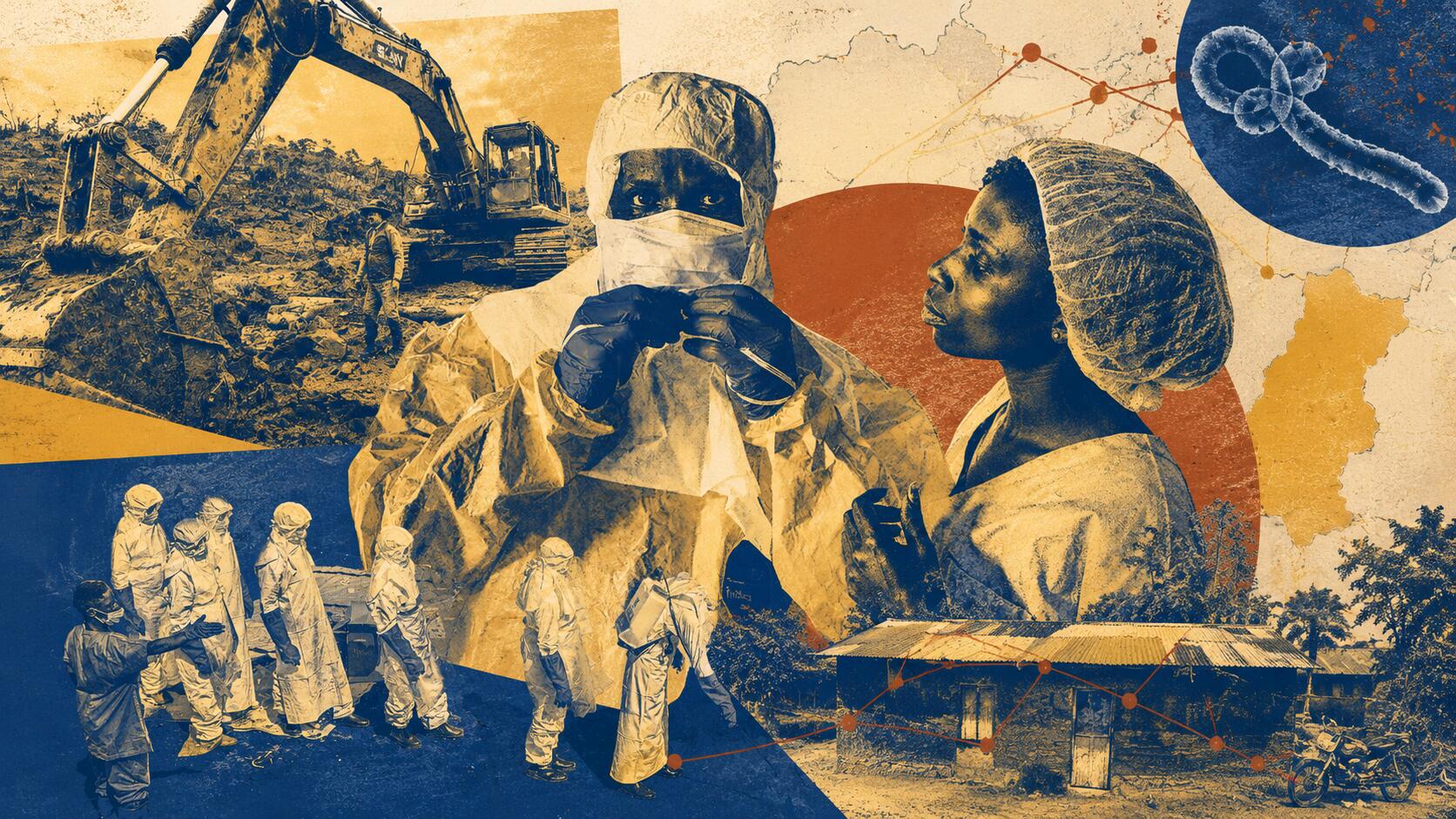
A virus spreads through people. An outbreak spreads through systems. That distinction has become increasingly clear across eastern Democratic Republic of the Congo, where a growing Ebola outbreak is exposing far more than a medical emergency. Conflict, unpaid health workers, mining activity, weak surveillance and constant movement across borders are creating conditions that allow disease to travel faster than response teams.
The current outbreak began on 15 May 2026, when the Democratic Republic of the Congo and Uganda declared cases of Ebola caused by the Bundibugyo virus, a less common strain than the Zaire virus linked to earlier outbreaks. Health authorities have spent the past two months trying to contain transmission across several provinces, while the World Health Organization has repeatedly warned that the outbreak remains active.
Numbers tell part of the story. On 15 July 2026, WHO reported 2,124 confirmed cases and 828 deaths in the DRC. Eight days later, on 23 July 2026, Congolese authorities raised the figures to 2,536 confirmed cases and 1,033 deaths. The outbreak has now become the DRC’s 17th Ebola outbreak and, according to the US Centers for Disease Control and Prevention, the third largest Ebola outbreak on record, spreading substantially faster than previous ones.
Health emergencies rarely arise from a virus alone. Eastern DRC has lived with conflict, difficult terrain and limited access to healthcare for years. Every delay in reaching a patient, every village cut off by insecurity and every community that struggles to trust public institutions creates another opening for transmission.
Mining communities have become one of the clearest examples. On 7 July 2026, workers around Mongbwalu were leaving the area while already ill rather than seeking treatment locally. Those journeys carried infections into new communities and helped fuel continued transmission. Mining has long supported livelihoods across the region, yet constant movement between extraction sites, villages and towns also creates pathways that public health teams struggle to monitor.
Another challenge emerged from inside the response itself. Frontline health workers responsible for case finding, treatment, safe burials and surveillance began protesting over unpaid wages. Demonstrations on 9 July 2026 highlighted unpaid wages, while later reports described strike threats linked to delayed salaries and poor working conditions. DRC Health Minister Samuel Roger Kamba publicly acknowledged payroll and response-management problems. Every outbreak depends on people willing to work under difficult conditions. Delayed salaries eventually weaken surveillance, treatment and community engagement.
Geography has also complicated containment efforts. Health authorities and the European Centre for Disease Prevention and Control say transmission has affected Ituri, North Kivu, South Kivu, Haut-Uele and Tshopo. Each additional province increases the number of contacts that must be traced, laboratories that must process samples, communities that require public information and border crossings that demand closer monitoring.
Uganda has become part of that wider picture. Cases earlier in the outbreak prompted regional preparedness measures before Uganda entered a 42-day enhanced surveillance period after reporting no new cases. WHO, the CDC and regional health authorities continue treating the situation as a cross-border emergency requiring constant coordination between neighbouring countries.
Response efforts have continued throughout the outbreak. Authorities have expanded contact tracing, laboratory testing, isolation, public awareness campaigns, border screening and logistical support. Community and event-based surveillance also remains central because previous Ebola outbreaks in the DRC showed that local leadership and integrated primary healthcare improve reporting, referral and public trust, particularly in isolated communities.
Looking closely at this outbreak reveals something many health crises eventually teach us. Disease often follows the routes already shaped by economics, labour and governance. Trucks, motorcycles, mining camps and informal markets connect communities every day. Viruses simply use the same roads.
The next phase of the response needs practical decisions more than dramatic announcements. Frontline health workers need to receive their salaries on time and work safely. Community surveillance must reach villages, mining settlements and busy market corridors instead of concentrating mainly around hospitals. Cross-border coordination between the DRC, Uganda and neighbouring districts must remain active while transport routes continue operating. Mining communities deserve health services that encourage early treatment instead of pushing sick workers to keep moving. Local primary healthcare also needs strengthening because people are far more likely to report illness when trusted services already exist close to home.
Public health often begins long before anyone enters a treatment centre. Strong payroll systems, trusted local clinics, functioning surveillance networks and cooperation across borders may seem unrelated to Ebola until an outbreak arrives. Eastern DRC offers another reminder that health systems are built during ordinary times, then tested during extraordinary ones.
Written By

The Trending Desk delivers timely headlines and insights on the stories shaping Africa's future.
Filed Under
Region:
Countries:
Series:
SDGs:
World Days:
Tags
How helpful was this story?