Susinsight Logo
Search by Topic
No topics matching ""

Home•Stories•Stories of Us

What Quiet Roads Remember

Inside a convoy through Kaduna in northern Nigeria, where childhood fear returned with adult clarity about fragile peace.
Published

June 1, 2026

Read Time

6 min read

Views

—

Follow on Google

The first time fear entered my life, I was too young to explain it.

Adults around me could not explain it either, at least not in ways a nursery school child could understand. I only remember urgency. My uncle arriving unexpectedly at school in Kaduna. Teachers speaking in lower voices. My elder sister and I being hurried out before the school day ended. My father was away on official duty. My mother was somewhere in town, close to the violence people had suddenly started whispering about.

Nobody sat me down to explain politics, religion, ethnicity, or power. A child does not need those words to know something is wrong. Fear has its own language. You hear it in silence. You see it in faces. You feel it when adults stop pretending they are in control.

“Fear has its own language. You hear it in silence.”

Years passed, but Kaduna remained a place where conversations about safety never stayed abstract for long. Violence was not constant, yet the possibility of unrest always sat somewhere in the background. People learned how to continue living around uncertainty. Markets reopened after attacks, schools resumed, and traffic returned; life carried on because people needed it to.

Then October 2018 arrived and dragged those childhood memories back into view with sharper meaning.

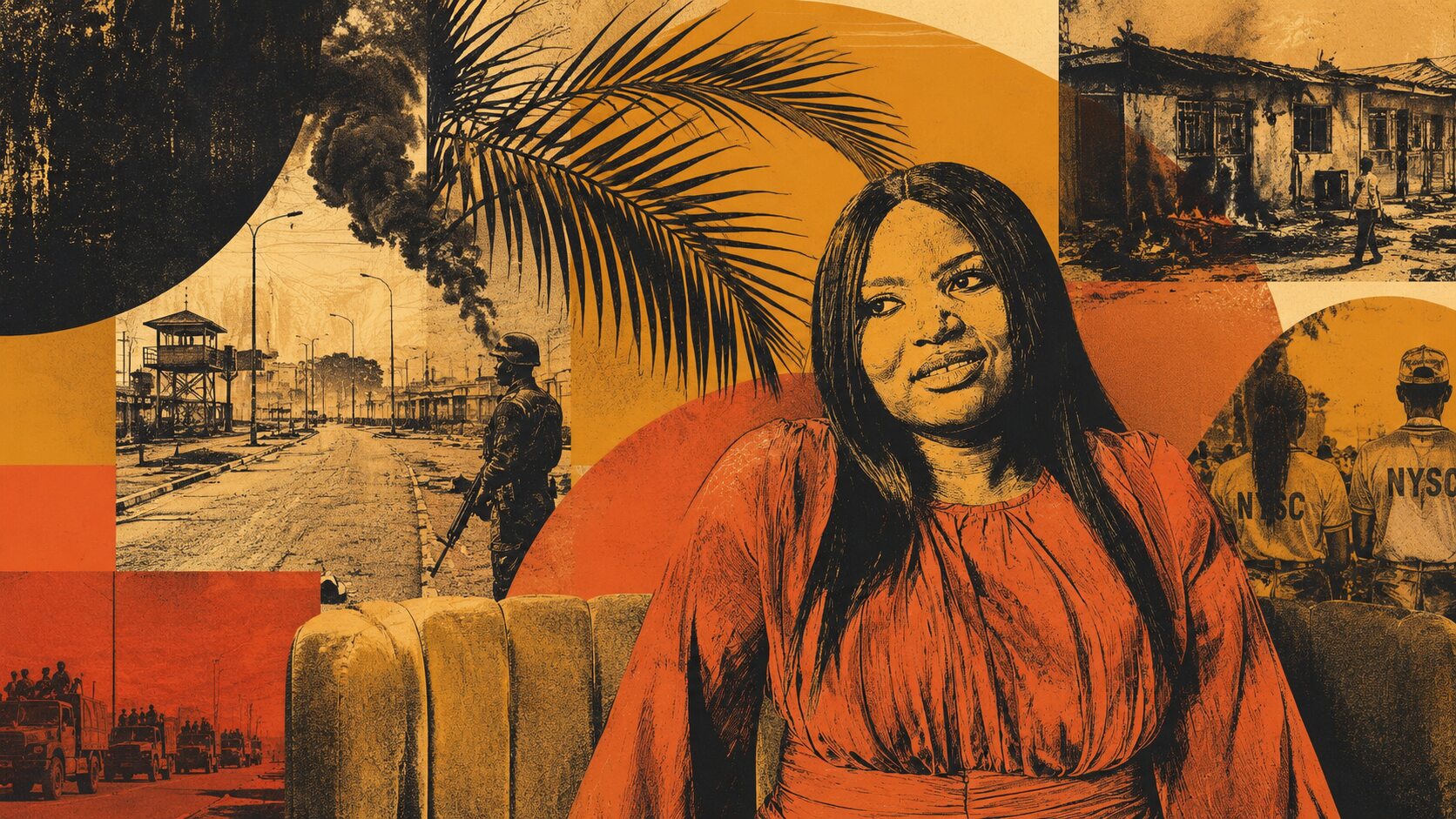
My NYSC reporting date was close. I had been redeployed to the Federal Capital Territory and was preparing to travel to Abuja. Around October 18 to 19, violence erupted again in parts of Kaduna State after clashes in Kasuwan Magani. Reports from that period placed the death toll at over 50 people. Authorities imposed a 24-hour curfew. Roads emptied almost immediately.

NYSC orientation activities for corps members posted to Kaduna were postponed because of the unrest. A programme designed to encourage national unity suddenly collided with the reality of division and insecurity.

People outside Nigeria sometimes misunderstand how deeply these moments shape ordinary life. News reports usually focus on casualties, politics, official statements, and security deployments. Daily experience looks different. Violence changes how people move, speak, and think. A city begins to hold its breath.

My reporting date approached while Kaduna remained locked down. Nobody knew when movement restrictions would ease. My uncle, a retired Major General, eventually arranged a military escort for the journey to Abuja. Two senior military officers accompanied us. My father sat beside me in the car. That drive changed something in me.

Kaduna looked familiar and damaged at the same time, with burnt shops lining parts of the road. Walls carried dark smoke stains. Broken structures stood half open like abandoned conversations. Small groups of people gathered quietly outside buildings, watching our convoy pass, and some carried visible injuries while others simply looked exhausted.

The roads were covered in a kind of silence I had never experienced before, even though Kaduna is rarely quiet. Anybody who knows the city understands that noise forms part of everyday rhythm. Traders calling customers. Cars forcing their way through traffic. Religious centres broadcasting prayers. Street conversations spilling into roadside arguments. None of that existed during the journey, with only convoy engines, occasional radio static, and the strange feeling of being protected and exposed at the same time.

Protection changes meaning when soldiers become necessary for ordinary travel.

I kept thinking about NYSC during that drive. Growing up, many Nigerians were taught to see the programme as a bridge across differences, where young graduates leave familiar regions and spend one year serving in places far from home. Shared experience was supposed to strengthen national identity, and exposure was supposed to reduce prejudice.

“Protection changes meaning when soldiers become necessary for ordinary travel.”

Sitting inside that convoy forced me to confront how fragile those ideas could become once violence enters the picture.

Years earlier, I viewed peace in simpler terms: Calm streets meant peace. Daily routine meant peace. Schools functioning, businesses operating, traffic moving normally. Experience later taught me that silence can also hide unresolved anger. Cities can appear stable while carrying deep fractures underneath.

Kaduna has lived through repeated cycles of ethno-religious violence since Nigeria returned to civilian rule in 1999. Research on the state consistently points toward the same tensions. Political marginalisation. Competition over land and resources. Poverty. Manipulation of ethnic and religious identity by elites who benefit from division. Thousands of deaths across decades. Distrust settling quietly between communities.

Those tensions do not disappear after curfews end.

Burnt buildings eventually get repaired, shops reopen, and people continue surviving because survival leaves little alternative. Yet something remains altered underneath daily life. Trust becomes harder to rebuild once fear enters ordinary spaces repeatedly.

Living in Dublin now creates another layer of reflection for me. Ireland carries its own history of conflict, division, and political violence. Nobody serious would describe any society as perfect. Still, daily life feels more predictable here in certain ways. Public tension usually moves through visible systems and institutions. Communication feels clearer, and accountability feels expected.

Back home, uncertainty often arrives first.

Rumours spread quickly during moments of unrest because many people do not fully trust official information. Security responses sometimes calm situations and sometimes deepen fear. Ordinary people spend enormous emotional energy calculating risk before danger even arrives.

That emotional exhaustion rarely enters conversations about development, even though people discuss infrastructure, investment, economic growth, education, technology, and innovation. Those discussions matter. My own academic and professional background keeps me deeply interested in systems and institutional performance. My work in financial crime and compliance depends on understanding hidden risk, weak processes, and the consequences of institutional failure.

Similar patterns exist outside finance too, and a society cannot build stable progress on top of unresolved violence. Schools close during unrest. Businesses pull back from insecure areas. Communities become segregated through fear. Young people grow up normalising instability because instability becomes familiar.

Military convoys should never become ordinary memories for young people preparing to start the next chapter of their lives.

That journey to Abuja forced me to stop romanticising unity. Slogans alone cannot hold a country together. Ceremonies cannot erase distrust. Real peace requires difficult work long before violence begins. Fair systems, credible justice, consistent dialogue, institutions people believe in, and political leadership willing to address grievances directly instead of waiting for another crisis.

Curfews may stop immediate violence and soldiers may restore temporary order, but neither approach repairs damaged trust.

Looking back now, fear no longer dominates my memory of October 2018. Survival mattered in the immediate moment. Relief came after reaching Abuja safely. Time eventually softened the sharpest edges of panic. The lesson stayed.

Peace is far more fragile than many people want to admit. Entire cities can change overnight when unresolved tensions finally erupt. Children absorb fear long before they understand conflict. Adults learn how to continue functioning around instability because life leaves few alternatives.

Somebody reading this from outside Nigeria may view stories like mine as distant political problems, while many Nigerians may read this and recognise parts of their own experience immediately. Different cities, different crises, similar uncertainty.

Nobody should grow accustomed to living that way.

Strong institutions matter because ordinary people need systems they can trust before crises arrive. Communities need spaces where disagreement does not automatically become hostility. Governments need to treat prevention seriously instead of relying mainly on force after violence begins.

Peace is built quietly, long before anybody notices its absence.

October 2018 taught me that lesson inside a military convoy driving through Kaduna under curfew, past burnt shops and wounded strangers, toward a future that suddenly felt less certain than it had only days earlier.

How helpful was this story?

Needs workVery helpful

More Related Stories

Côte d’Ivoire Makes Digital Cocoa Cards Mandatory

Côte d’Ivoire Makes Digital Cocoa Cards Mandatory

byThe Trending Desk• Sep 10, 2026

As of September 9, 2026, Côte d’Ivoire’s new cocoa traceability system is already slowing purchases, with farmers, buyers, and cooperatives scrambling to adjust before EU deforestation rules take effect.

Read More
Niger Took Back Its Uranium. But Will New Ownership Deliver Development?

Niger Took Back Its Uranium. But Will New Ownership Deliver Development?

byTomi Abe• Aug 10, 2026

The nationalization of SOMAÏR and the creation of TNUC mark a new era, but ownership alone cannot turn uranium wealth into development.

Read More
Lagos Turns Its Waste Problem Into a $2.5 Billion Question

Lagos Turns Its Waste Problem Into a $2.5 Billion Question

byThe Trending Desk• Aug 7, 2026

In mid‑2026, Lagos is facing up to 15,000 tonnes of daily waste and betting that sorting, recycling and new infrastructure can turn part of it into economic value.

Read More
Why Véronique Tadjo Sees Storytelling as Development Infrastructure

Why Véronique Tadjo Sees Storytelling as Development Infrastructure

byAdetola Adetayo• Jun 25, 2026

From Côte d’Ivoire classrooms to Ebola narratives and climate themes, Véronique Tadjo’s work shows how culture, memory, and literature shape development far beyond roads, energy, and policy.

Read More
Nigeria’s Federal Bargain Under Strain as Centralisation Deepens Security and Fiscal Crises

Nigeria’s Federal Bargain Under Strain as Centralisation Deepens Security and Fiscal Crises

byTomi Abe• Jun 23, 2026

From the federal bargain Tafawa Balewa defended in 1957 to today’s insurgency, banditry, and state police debates, Nigeria’s unity is being tested by a centralised federal structure built for a different era.

Read More
Dr. Thomas Mensah And The Unfinished Project Of African Tech Sovereignty

Dr. Thomas Mensah And The Unfinished Project Of African Tech Sovereignty

byTomi Abe• May 19, 2026

Despite shaping global fiber optic systems, Mensah warned that Africa still lacks the infrastructure, research funding, and institutions to compete.

Read More
France Returned the Djidji Ayôkwé, but Côte d’Ivoire Wants More Than a Ceremony

France Returned the Djidji Ayôkwé, but Côte d’Ivoire Wants More Than a Ceremony

byEzinne Okoroafor• May 4, 2026

Beyond legal agreements, the Ebrié people are pushing to revive the drum’s original role in communication, ritual, and collective memory.

Read More
In Northern Nigeria, Trust Shapes Vaccine Uptake More Than Technology Alone

In Northern Nigeria, Trust Shapes Vaccine Uptake More Than Technology Alone

byNaomi A. Frank-Opigo• Apr 20, 2026

Even as GIS mapping improves coverage, community beliefs, religious leaders, and past medical harm continue to influence decisions.

Read More
IMF Demand Across Africa Climbs Toward $70 Billion Since 2020

IMF Demand Across Africa Climbs Toward $70 Billion Since 2020

byThe Trending Desk• Apr 19, 2026

On April 18, 2026, African countries push IMF exposure near $70 billion since 2020 as about 20 economies enter active programmes amid shocks and rising debt pressure.

Read More
Nigeria and Kenya Explore New Ways to Turn Remittances Into Growth

Nigeria and Kenya Explore New Ways to Turn Remittances Into Growth

byThelma Ideozu• Apr 7, 2026

From diaspora bonds to mobile investment tools, both countries are testing solutions to convert everyday transfers into long-term capital.

Read More
Côte d’Ivoire Makes Digital Cocoa Cards Mandatory

Côte d’Ivoire Makes Digital Cocoa Cards Mandatory

byThe Trending Desk• Sep 10, 2026

As of September 9, 2026, Côte d’Ivoire’s new cocoa traceability system is already slowing purchases, with farmers, buyers, and cooperatives scrambling to adjust before EU deforestation rules take effect.

Read More
Niger Took Back Its Uranium. But Will New Ownership Deliver Development?

Niger Took Back Its Uranium. But Will New Ownership Deliver Development?

byTomi Abe• Aug 10, 2026

The nationalization of SOMAÏR and the creation of TNUC mark a new era, but ownership alone cannot turn uranium wealth into development.

Read More
Lagos Turns Its Waste Problem Into a $2.5 Billion Question

Lagos Turns Its Waste Problem Into a $2.5 Billion Question

byThe Trending Desk• Aug 7, 2026

In mid‑2026, Lagos is facing up to 15,000 tonnes of daily waste and betting that sorting, recycling and new infrastructure can turn part of it into economic value.

Read More
Why Véronique Tadjo Sees Storytelling as Development Infrastructure

Why Véronique Tadjo Sees Storytelling as Development Infrastructure

byAdetola Adetayo• Jun 25, 2026

From Côte d’Ivoire classrooms to Ebola narratives and climate themes, Véronique Tadjo’s work shows how culture, memory, and literature shape development far beyond roads, energy, and policy.

Read More
Nigeria’s Federal Bargain Under Strain as Centralisation Deepens Security and Fiscal Crises

Nigeria’s Federal Bargain Under Strain as Centralisation Deepens Security and Fiscal Crises

byTomi Abe• Jun 23, 2026

From the federal bargain Tafawa Balewa defended in 1957 to today’s insurgency, banditry, and state police debates, Nigeria’s unity is being tested by a centralised federal structure built for a different era.

Read More
Dr. Thomas Mensah And The Unfinished Project Of African Tech Sovereignty

Dr. Thomas Mensah And The Unfinished Project Of African Tech Sovereignty

byTomi Abe• May 19, 2026

Despite shaping global fiber optic systems, Mensah warned that Africa still lacks the infrastructure, research funding, and institutions to compete.

Read More
France Returned the Djidji Ayôkwé, but Côte d’Ivoire Wants More Than a Ceremony

France Returned the Djidji Ayôkwé, but Côte d’Ivoire Wants More Than a Ceremony

byEzinne Okoroafor• May 4, 2026

Beyond legal agreements, the Ebrié people are pushing to revive the drum’s original role in communication, ritual, and collective memory.

Read More
In Northern Nigeria, Trust Shapes Vaccine Uptake More Than Technology Alone

In Northern Nigeria, Trust Shapes Vaccine Uptake More Than Technology Alone

byNaomi A. Frank-Opigo• Apr 20, 2026

Even as GIS mapping improves coverage, community beliefs, religious leaders, and past medical harm continue to influence decisions.

Read More
IMF Demand Across Africa Climbs Toward $70 Billion Since 2020

IMF Demand Across Africa Climbs Toward $70 Billion Since 2020

byThe Trending Desk• Apr 19, 2026

On April 18, 2026, African countries push IMF exposure near $70 billion since 2020 as about 20 economies enter active programmes amid shocks and rising debt pressure.

Read More
Nigeria and Kenya Explore New Ways to Turn Remittances Into Growth

Nigeria and Kenya Explore New Ways to Turn Remittances Into Growth

byThelma Ideozu• Apr 7, 2026

From diaspora bonds to mobile investment tools, both countries are testing solutions to convert everyday transfers into long-term capital.

Read More