São Tomé And Príncipe Tests Whether Universal Healthcare Can Survive External Funding
Nearly all health financing comes from donors, raising questions about long-term stability and system control.
Author
Editors
Published
June 3, 2026
Read Time
9 min read
Views
—
A Small Island With Large Health Ambitions
Even with no home-trained doctors, the Central African Island nation of São Tomé and Príncipe aims for universal healthcare (UHC). Home to over 230,871 people, it remains one of Africa’s smallest and least populated countries. Yet a heavy burden of malaria, maternal mortality, and rising non-communicable diseases (NCDs) keeps UHC close to daily survival.
Struggles with UHC show how difficult life becomes on small islands. Geographic isolation and strong reliance on external funding make steady care hard to maintain. Health systems also shift with changing weather patterns as rising sea levels disrupt waste disposal and trigger water-borne disease outbreaks.
Recent efforts include a new health development plan, the DHIS2 platform, and telemedicine initiatives. Still, the core pillars of UHC, accessible service, quality care, and stable financing, remain out of reach. São Tomé’s low doctor-patient ratio shows ongoing gaps in staffing and retention, leaving universality out of reach.
São Tomé and other small African islands reflect many remote communities across the continent. UHC efforts here offer a test case for care delivery in isolated settings. This article reviews progress and setbacks so far, situating São Tomé within a broader country profile.
Building on that review, current planning efforts come into clearer focus through the Plano Nacional de Desenvolvimento da Saúde PNDS III (2023-2032), described as the third and most ambitious health strategy so far. Five priorities guide the plan: strengthening primary care and universal health coverage, promoting health across policies, improving emergency preparedness, securing financing, and developing human resources. Alignment with the WHO strategy, UHC2030, and SDG 3.8 frameworks shows a shift from basic system fixes to broader system design. Funding largely comes from the Global Fund with $29.6 million from 2020 to 2026, GAVI support with $6.6 million from 2021 to 2026, and WHO funding with $10.1 million.
Earlier efforts shaped this direction. PNDS I (2017-2021) followed UN adoption of the SDGs and concerns about system inefficiencies. Focus stayed on primary care, maternal and child health, and movement away from hospital-centered care. The plan aimed to address fragmented programmes and integrate health systems into broader development strategies like the Poverty Reduction Strategy Paper (2003-2011). Results showed uneven progress. Under-5 mortality dropped from 18.3 to 15.4 per 1,000 live births, while maternal mortality remained difficult to reduce. Drug supply chains improved, stockouts fell, rural centers expanded, and teams from Cuba and Portugal filled workforce gaps.
PNDS II (2021-2025) continued along this path with added attention to governance and data systems. DHIS2 pilots expanded from 2018 to nationwide use by 2020, supporting efforts to digitize records, developed with multilateral backing. A National Observatory began tracking medicine quality and system performance.
A System Built on Other People's Priorities
Funding patterns and partnerships start to explain how these plans move from paper to practice. São Tomé and Príncipe has relied on steady external backing, not as a side option but as a working model shaped by limited domestic resources. Government efforts show that island geography does not always translate into policy isolation, as seen in recent reports on development financing.
One clear example sits with the National School Feeding and Health Programme, PNASE. After 30 years, a programme once driven almost entirely by donor funding began transitioning ownership in 2010 with support from the World Food Programme and reached official adoption in 2011. It now delivers daily meals to over 43,000 schoolchildren. Local food sourcing ties nutrition support to local production, which quietly feeds into school attendance and small-scale economic activity.
Broader health financing follows a similar pattern. The World Bank supports infrastructure upgrades, service delivery reforms, and disease surveillance under REDISSE IV. The WHO Country Cooperation Strategy 2023 to 2027 carries a US$10 million envelope focused on governance and policy capacity. UNICEF, UNFPA, and UNDP fund maternal and child health, data systems, and emergency preparedness. Additional backing comes from the Global Fund, the African Development Bank, and bilateral partners such as China, Portugal, and Cuba, which provide medical equipment, specialist training, and technical exchange. Digital tools, facility upgrades, and workforce expansion all trace back to these partnerships.
Dependence sits close to these gains. External funding makes up about 90% of the budget. Donor priorities often shape programme design, timelines, and scope, sometimes narrowing space for locally driven decisions. Sustainability debates around external funding echo strongly in this context.
Recent UNAIDS withdrawal from HIV and AIDS programmes across several countries offers a reminder of how quickly support can shift, as other governments are pushed to adjust. São Tomé faces similar exposure if funding patterns change.
Exposure to shifting funding also connects directly to another constraint, the people needed to run the system. São Tomé and Príncipe has no medical school, so training happens abroad, and the country depends on imported staff as much as imported medicines. Partnerships with China, Cuba, and Portugal fill part of that gap, yet staffing levels remain low.
Numbers show the scale of the shortage. World Health Organization guidance sets 4.45 workers per 1,000 population as a baseline for essential service coverage. São Tomé records about 2.18 skilled health workers per 1,000 people. Physician density stood at around 0.5 per 10,000 in 2017, while nurses and midwives reached 21.6 per 10,000 in 2021. A recent profile frames this as a critical shortage undermining progress toward UHC.
Distribution creates another layer of strain. Hospital Dr. Ayres de Menezes, located in the capital, holds the country’s full pool of specialist physicians and remains the only site with X-ray diagnostics and oxygen supply. District health centers outside the capital rely on nurses and about 3–5 generalists. A 2022 study covering 47 African countries describes a similar pattern, with skilled workers clustered in capital cities. Global estimates place only 23% of workers in rural areas.
Daily care reflects these gaps. Many rural facilities function without full-time doctors. Maternal care shows uneven access, with 88% of rural births attended by skilled personnel compared to 95% in urban areas. Delays in treatment and preventable complications tend to follow these patterns.
Policy responses exist on paper and in practice. The National Health Development Plan includes foreign training partnerships, expanded nursing and midwifery programs, rural incentives such as housing support, and backing from the WHO and the World Bank for recruitment and retention.
Limits appear quickly. Training abroad comes at a high cost, and some graduates remain overseas where pay and working conditions are better, reinforcing brain drain. Ongoing emigration of professionals keeps the workforce thin and unevenly distributed.
When Geography Decides Who Gets Care
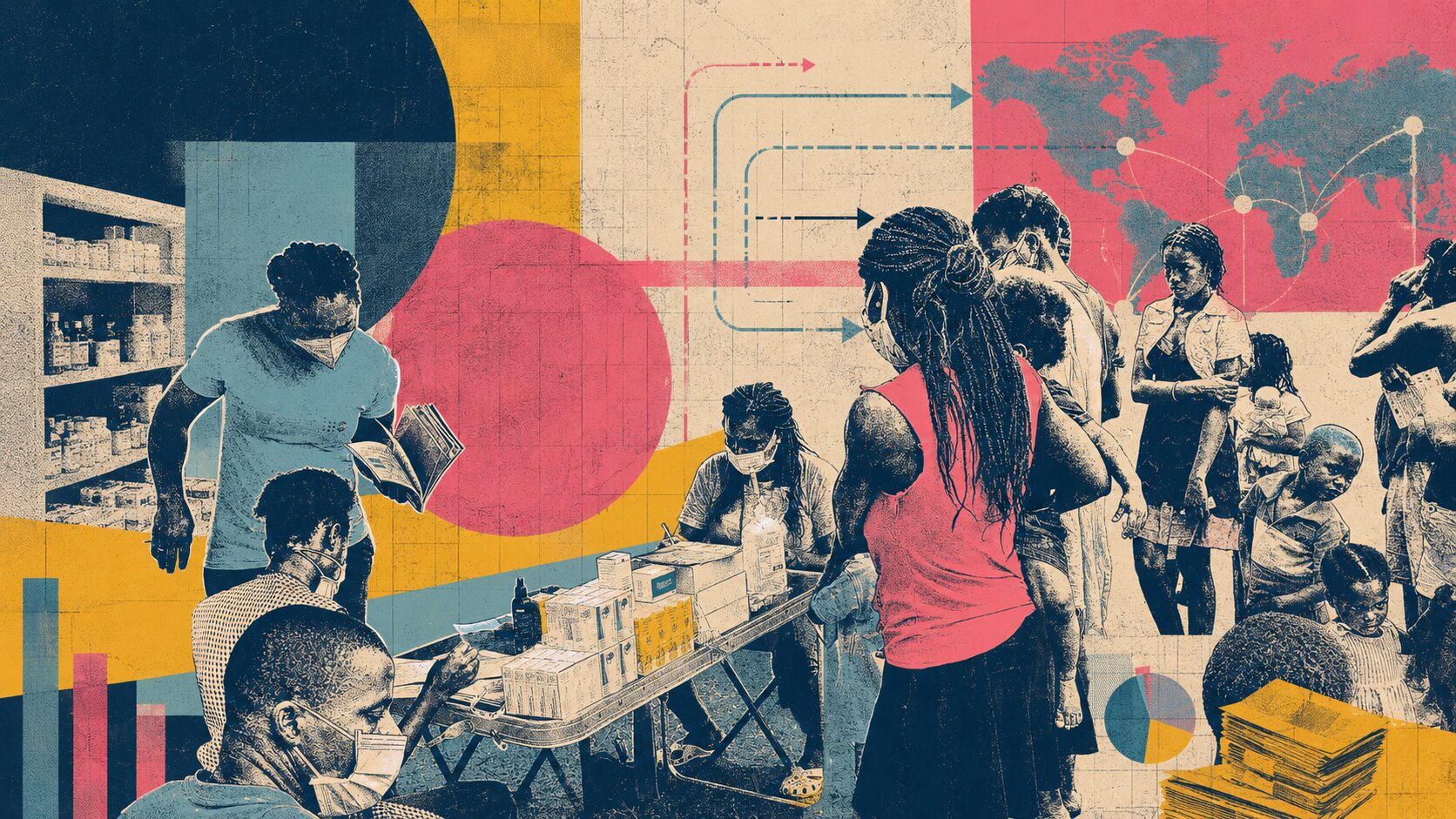
Pressure on staffing connects closely with access to medicines, where shortages show up in quieter but persistent ways. WHO highlights note that “São Tomé and Príncipe continues to face frequent stock-outs of essential medicines in the health services, high and unaffordable prices for most of the population.”
Access to medicines shapes everyday care decisions. The nation’s geographical isolation and limited resources feed supply chain gaps, while taxes and tariffs push prices upward. This markup does not stay within procurement systems. Households carry them directly. Health insurance reaches only 0.7% of the population, leaving most payments out of pocket. The same assessment found that 54% of households cannot afford needed medicines. Pharmaceutical imports climbed from about $495.698 in 2019 to $1086.848 USD by December 2024, a jump that mirrors rising demand and cost pressure.
These rising import costs result in increased cost of care for the majority of the population. Patients managing cardiovascular disease or diabetes depend on regular medication. Higher prices interrupt that routine. Distribution patterns also differ across locations. Urban areas receive medicines first, while rural communities face longer delays. Interruptions often lead to complications, hospital visits, or untreated illness.
Policy responses show up, though slowly. The country has historically relied on imports, with no domestic pharmaceutical production and no dedicated manufacturing policy. A WHO self-assessment in 2022 rated the system at Maturity Level 1, pointing to early-stage regulatory capacity.
Efforts to shift this position have started. A multi-institutional mission in September 2025 brought together IGAD, AUDA NEPAD, and ECCAS to support the National Medicines Regulatory Authority, ARFAMED. Work focused on aligning legal frameworks with the AU Model Law on Medical Products Regulation and moving toward Maturity Level 3.
Regional cooperation offers a shorter-term option. São Tomé and Príncipe joined a pooled procurement initiative in 2024 with Cabo Verde, Seychelles, and Madagascar. Shared purchasing allows bulk negotiation for better pricing and access to quality assured medicines, reflecting broader analysis of pooling. WHO continues to support implementation through technical assistance on governance and shared system management.
Access to medicines and staffing gaps spill into maternal and reproductive health, where outcomes show both progress and strain. The maternal mortality ratio dropped from 110 per 100,000 live births in 2017 to 75 per 100,000 in 2023. Neonatal mortality moved from 11 per 1,000 live births in 2015 to 7 in 2023. Numbers show improvement, though daily realities around care still feel uneven.
Rural mothers carry a heavier load. Distance shapes access in direct ways. Some women travel across villages and rivers just to reach a clinic, with rainy seasons stretching that journey further. Facilities vary in condition, with some built from basic materials. Staff shortages remain tied to training costs and limited workforce supply. Reaching a clinic does not always guarantee skilled care at the point of need, as illustrated by maternal clinic experiences.
Patterns around reproductive health reveal additional gaps. A 2022 study involving 518 pregnant women found that 20.1% were adolescents, with 104 starting childbearing before age 20. Contraceptive access remains limited, with 35.5% of women using modern methods. Adolescent use stays lower, shaped by partner refusal and irregular supply. These details point to decisions influenced by both availability and social pressure.
Gender based violence continues across age groups. More than 28% of women aged 15 to 49 report experiencing intimate partner violence. Reported cases doubled between 2014 and 2021. Public perception shows mixed signals. While 85% believe police take reports seriously, nearly 70% think women who report violence face blame or criticism.
Support structures exist but vary in reach. Since 1985, UNFPA programmes have expanded sexual and reproductive health services and responses to gender based violence. The 2023–2027 programme focuses on adolescent empowerment, youth-friendly services, and changes in social norms, with targets tied to contraceptive coverage, school retention for girls, and reduced violence.
Water and sanitation conditions shape these experiences further. Only 36% of the population has access to safe drinking water, while 34% has proper waste management. Women bear the burden of water collection and face risks linked to unsafe sanitation, affecting schooling, health access, and daily routines.
These realities circle back to a broader view of what progress looks like in practice. São Tomé and Príncipe shows how far policy ambition can stretch in a setting with limited resources, and how quickly gaps appear when systems rely heavily on external inputs. Donor funding, workforce shortages, and gender disparities sit side by side, shaping what care looks like from clinics to households.
Across Africa’s remote areas and small island states, this case feels familiar. Geographic isolation does not block system improvement, yet constant reliance on outside support creates its own limits. A country can expand services, train staff abroad, and build programmes, yet still struggle to hold everything together when funding priorities shift or trained workers leave.
Future direction rests on choices already in motion. Domestic investment, stronger local control of programmes, and policies that address gender gaps will shape outcomes. São Tomé’s path does not offer a fixed answer, though current patterns show where pressure points remain and where attention keeps returning.
Written By

Naomi is a Contributing Researcher and Writer at Susinsight.
Filed Under
Region:
Countries:
Series:
World Days:
How helpful was this story?