Sudan Market Drone Strike Kills 11 Civilians
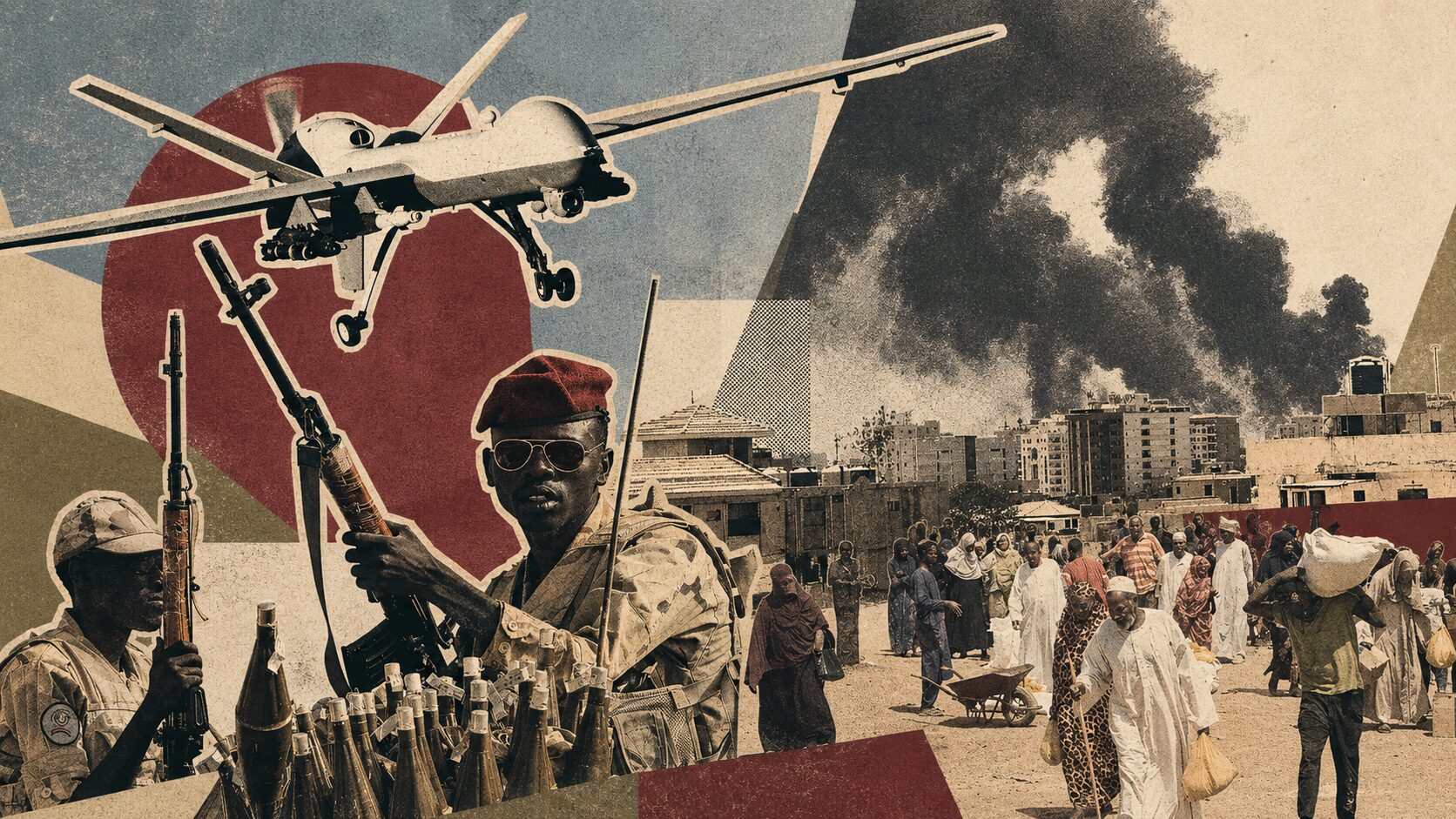
On June 6, 2026, a drone strike hit a market in Abu Zaeima, Sudan, killing at least 11 people as the country's war entered its fourth year.
Author
Editors
Published
June 8, 2026
Read Time
5 min read
Views
—
“The world has failed to meet the test of Sudan.”
Those were the words used by the UN relief chief, Tom Fletcher, earlier this year. Twenty-four hours before a deadly strike hit a market in central Sudan, similar attacks had already struck nearby villages. Then, on Saturday, June 6, 2026, another drone attack tore through Abu Zaeima’s primary market in North Kordofan.
At least 11 people were killed.
Emergency Lawyers, a Sudanese rights group that has documented abuses since fighting erupted in April 2023, reported the attack and warned that the death toll could rise. Abu Zaeima is under Rapid Support Forces (RSF) control, but one detail remains unresolved. No group has claimed responsibility. Neither the RSF nor the Sudanese Armed Forces (SAF) commented, and investigators have not identified the perpetrator.
Later that same day, a second drone strike hit a fuel station in El Obeid, the capital of North Kordofan. Hospital sources reported four wounded civilians. Together, the attacks added to a grim week in which nearly 70 people were killed in two separate strikes across North Kordofan and West Kordofan.
For many outside Sudan, the incident may appear as another headline in a war that rarely commands sustained international attention. For people living in Kordofan, the attack landed in a marketplace, one of the few places where daily life still tries to continue amid conflict. Traders who once worried about prices and transport now count the seconds between the sound of drones overhead and the rush to find cover.
The strike happened in a region that has become increasingly central to Sudan’s war. Kordofan links RSF strongholds in Darfur with army-controlled areas in eastern Sudan. Oil reserves, arable land, and major transport routes have made the area strategically important to both sides. Fighting has intensified across Kordofan and Blue Nile states near the Ethiopian border, particularly since RSF forces captured El Fasher in October 2025 after an 18-month siege that involved artillery, drones, and ground assaults.
Sudan’s conflict began on April 15, 2023, when fighting broke out between the SAF and the RSF in Khartoum. The RSF itself traces its roots to the Janjaweed militias mobilized under former President Omar al-Bashir during the Darfur conflict. Between 2003 and 2005, up to 300,000 people were killed during the Darfur genocide. Late November 2023 brought another major shift when the RSF secured control over four of Darfur’s five states.
Military gains and losses have continued to reshape the battlefield. March 2026 saw SAF forces retake Bara and secure El Obeid before the RSF recaptured Bara later that month. SAF and allied Joint Forces also lifted sieges at Kadugli and Dumbodia earlier this year. Yet battlefield developments have done little to reduce the suffering of civilians.
Drone warfare has become one of the defining features of the conflict. United Nations data recorded at least 880 civilian deaths from drone strikes between January and April 2026. Another report documented 90 fatalities and 142 injuries from drone attacks carried out by both the RSF and SAF between late January and February 6. Three attacks on medical facilities in South Kordofan during the previous week left 31 people dead, according to the World Health Organization.
Numbers alone struggle to capture what prolonged conflict has done to the country.
Fourteen million people have been displaced. Nine million remain inside Sudan, while 4.4 million have crossed into Chad, Egypt, and South Sudan. More than 33 million people now require humanitarian assistance. Tens of thousands have been killed since fighting began, though exact figures remain disputed. The United Nations describes Sudan as the world’s largest displacement and hunger crisis.
North Kordofan illustrates how quickly civilian life can unravel. El Obeid remained partially encircled by RSF forces for months. Drone attacks have disrupted power and water services, making healthcare delivery increasingly difficult. More than 300,000 people have fled frontline areas around El Fasher, Kordofan, and Blue Nile since late 2025.
Emergency Lawyers described attacks on civilians as a blatant violation of international humanitarian law. The Sudan Doctors Network has repeatedly called for immediate action to protect civilians. The UN Human Rights Chief has raised concerns about growing devastation caused by drone attacks, while the World Health Organization continues documenting strikes on healthcare facilities.
One uncomfortable reality sits at the center of this story. Civilian casualties continue to rise while accountability remains scarce. Neither side has accepted responsibility for the latest attack. Markets, hospitals, aid convoys, and fuel stations increasingly appear within the reach of modern warfare.
Another reality deserves equal attention. Sudan’s war has entered its fourth year, even as global attention keeps shifting elsewhere. Communities across Kordofan, Darfur, and other regions continue living through daily violence long after the headlines move on.
A meaningful response starts with civilian protection. Independent investigations into drone strikes need support and access. Humanitarian corridors for places such as Abu Zaeima and El Obeid need stronger guarantees. Markets, medical facilities, and fuel stations require protection from attack regardless of which side controls the surrounding territory. Long-term stability will demand renewed diplomatic pressure, credible accountability mechanisms, and a peace process that brings both the SAF and RSF back into negotiations.
Sudan’s latest drone strike is more than a casualty count from a distant conflict. Eleven deaths in a market, four civilians wounded at a fuel station, and nearly 70 people killed in a single week tell a larger story. A war entering its fourth year continues to reshape daily life for millions, while the search for safety, accountability, and peace grows more urgent with every passing day.
Written By

The Trending Desk delivers timely headlines and insights on the stories shaping Africa's future.
Filed Under
Region:
Countries:
Series:
SDGs:
World Days:
Tags
How helpful was this story?